Showing posts with label economic tradeoffs. Show all posts

Friday, June 19, 2026

Healthy food versus False Economics: More profits can be made in the for-profit US healthcare system by making people sick first and then helping (but not curing) them.

     My wife and I seem to have always had the same reaction when our children told us about their school meals. “Oh, we really enjoyed our school meals when we were growing up”. They would look at us rather disgustedly and then talk about the food that they were presented with. I remember a lot of milk past its “use by” date but some of it seemed to go bad even before. I cannot really say that I know the reason just the result.

A healthy lifestyle starts at the beginning

     Japan has Universal Health Care, as do almost all developed nations in the world. Thus, the government has a direct financial interest in having everyone as healthy as possible. This includes not being obese and eating well. The US, with its for-profit healthcare, would be okay with us being healthy but doesn’t really care much one way or another. The pharmaceuticals would likely prefer us unhealthy as it gives them much more ability to create drugs to reduce symptoms (but not cure), and obtain massive profits, that the food and medical industries have helped to create.

     Besides Universal Health Care, which gives the government more motivation for healthy citizens and deprives private insurers from making money on illness, what does Japan do to help their citizens? One major thing is that, in school, they teach their children their adult responsibilities. Children help clean the schools. They help to prepare the meals. They exercise as a regular part of life walking to and from school and around the buildings. Some may be part of sports teams but, unlike in the US, all of the school children exercise in various ways.

     Most of the US has abandoned the notion of school cooked foods from real ingredients. Not so in Japan. There are no food pyramids or food balancing charts. There is tradition and regular-sized portions of freshly prepared food.

What social influences in the US fight against healthy eating?

     We have an “interesting” situation developing in the US. The prices of food at most of the “fast food” restaurants are approaching the cost of full-service regular restaurants. They are still fast because their food is either pre-prepared or prepared for immediate cooking and serving.

     This applies to food eaten at home and during travel and work. What about the schoolchildren? In the US, we have two obstacles. These are the refusal, or social unpopularity, of eating a balanced meal AND the strong desires for communities to pay less for education and children.

     McDonald’s, at the urging of some vocal parents, has attempted to have healthier food on their menu several times. We still have apple slices as options but most of the attempts have failed. Because who thinks of going to McDonald’s for a healthy meal?

How, and where, does it go wrong for US schoolchildren?

     First, I should say that Japanese schoolchildren and adults do face marketing barrages to eat fast food and processed foods. They are not isolated from the rest of the world. But they see them as treats, special occasion foods that add a bit of variety to their nutritious, but not necessarily always exciting, regular meals.

     As is true everywhere, US parents have only a limited amount of time and energy. But the surrounding environment, and peer culture, encourages parents to not spend much time on nutrition. It used to be that, when I was working on preparing dinner in the kitchen, one of my children would be there with me learning to cook (and learning to accept mistakes). No longer. But, I still cook. About half of the time, I can only call it “preparing” (heating up, combining a few things) but the rest of the time I still cook.

     So, in spite of their parents doing the best they can (which, unfortunately, is sometimes not very well at all), children are not ready, and able, to find their own route to healthy practices. Nor should they be. The community, or the “village”, should be doing that. But not in the US.

Don’t forget about cost.

     I can buy a nice apple for $1.25 in the US. I can buy a Snickers® candy bar for $1.50 and, often, on sale for that same $1.25 or even a $1. Now, I like Snickers® candy bars and my wife likes them even more. They are one of the more nutritious candy bars but they are still candy with plenty of lovely addictive refined sugar. In Japan, not barraged by ads and peers showing the fast, commercial, path a person would likely usually prefer the apple. How many of you, or your children, would pick the apple?

     I like cooking shows and, based upon the number of them produced and the channels dedicated to them, I am not alone. But I can only gape at the healthy cooking shows. The previously mentioned apple is only a single item in a large comparison list between the advertised healthy meal and the easily obtained processed food menu. If a person examines the comparison only from a point of money, the healthy food menu does not often win. But it does win occasionally. But, add the time needed for preparation and cleanup and the scale tips very awkwardly towards the processed food.

     School boards are always being requested to not raise taxes. There are areas which can NOT be put off. There are areas which can be put off (maintenance) but will mean even greater expense in the future. Then there are the students and their education. Many parents will use something like Great Schools (https://www.greatschools.org/) to compare schools and try to live in the “best” area, that they can afford, for their children. This site concentrates on test scores and college readiness. They also have statistics about class sizes and compositions and so forth. What they do NOT have is “how good are the lunches?”, “what are the arts and music programs like?” or other non-quantitative areas.

     School lunches don’t fall into the quantitative category. Thus, they are an area in which the school board can cut budgets without badly reflecting in the quantitative scores. And they do. A processed lunch that just needs to be heated up and served is not only less expensive that a nutritionally balanced, freshly prepared and cooked, meal — but it is what the student expects and what their peers expect.

     We had a friend of the family (not a real close friend but someone we could talk with) who was a nutritionist for the elementary school that our children attended. One day, we heard she had quit — she just couldn’t handle heating up processed food for the children every day anymore. She wanted to use her skills, and experience, and prepare healthy food but that was spitting against the wind.

Children who get accustomed to unhealthy meals are unlikely to make healthy choices in the future.

Ideas & Interpretations is a reader-supported publication. To receive new posts and support my work, consider becoming a free or paid subscriber.

Sunday, January 6, 2019

Economic reevaluation: From GDP to the donut


     The Gross Domestic Product (GDP) has been maintained as the holy grail of the world of economic evaluation for around 75 years, since it was given a modern definition by Simon Kuznets in 1934 and then adopted as the primary method for measuring a country's economy at the Bretton Woods conference in 1944. Even as Kuznets was making use of the term, he warned against overusing it and making it more important than it really was.
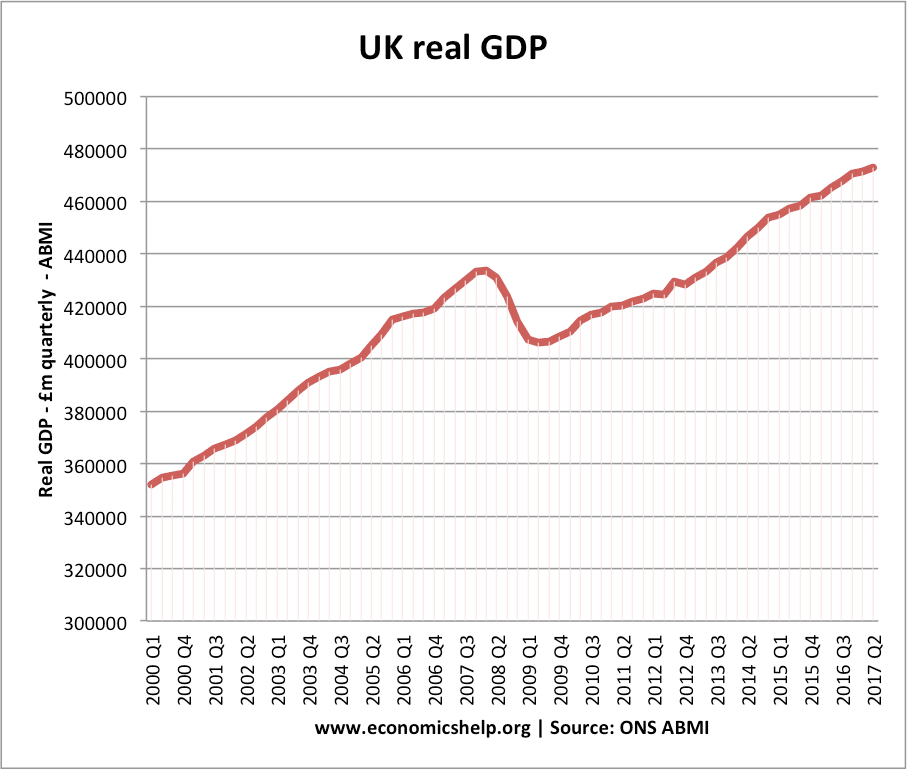
     Alas, humans often prefer to take the easy route rather than more troublesome, but more accurate, methods. Thus, the GDP -- which was relatively straight-forward (although requiring huge masses of data) to calculate became the primary indication of a country's economic health. An increasing GDP was "good", rapidly increasing GDP was "better" and a stagnant, or decreasing, GDP was "bad". An example of such a graph follows ("real" GDP compensates for inflation and graphs according to a certain monetary index at a fixed period of time):


     Many criticisms have been made about the GDP but it was simple, came with an apparently exact number, and there was no alternate proposal to take its place. Complaining about something that is bad is useless unless you have something better that people can agree upon to take its place.

Some of the primary criticisms of the GDP as a primary economic index are:
  1. It leaves out a lot of the economic activity of a country -- probably the majority of activity. It only counts activity where "money" (or economic credit) is transferred from one entity (person, corporation, country, ...) to another. This leaves out all of the work done by "non-paid" workers -- including parenting, "housewives" and "househusbands", inter-generational childcare and other family work (such as within a business or on a farm), and so forth. Think that shouldn't count? Think about how many minutes a country would survive without it.
  2. The model relies on continued growth. Growth of population, growth of numbers of consumers, growth of production, growth of monetary supplies according to GDP status (a bit circular there), and on and on. This emphasis on growth also pushes the economy towards consumerism and nonrenewable wastage of resources. In a finite world, with finite resources, and the need to protect the environment and economy for future generations, the idea is counter-productive and destructive.
  3. GDP aggregates the economic transfers within a country. Thus, if one company (or individual) controlled all official economic activity, the GDP could be the same as for a country where economic transfers were spread out equally among all the people within a country. Accurate numbers but largely meaningless in terms of economic health.
  4. Economic credit transfers is a poor indicator of a country's health by itself. There are many other "soft" factors -- "happiness", income distribution, access to food and water and clean air, and so forth. Thus, you can easily have a strongly positive GDP growth rate in a country in which no one wants to live.
     As mentioned above, one objection to discarding the GDP as a primary economic indicator has been the lack of anything "better" to take its place. In this case, "better" means something that, at the least, takes into account the above criticisms of the GDP model.
     Kate Raworth came up with a model that has limits -- the limits are indicated by an "outer" limit where human activity uses up resources faster than can be renewed and an "inner" limit beyond which human activity cannot achieve the minimum needed to live. These upper and lower limits are expressed as two concentric circles or -- in the shape of a donut (doughnut for some).


     So, what does it mean to have a new model? Will this new model solve all of the world's problems? No. However, in order to THINK about a situation, or an idea, it is very useful to have a visualization of the concept. A person must have words, or some other representation (such as images), to properly manipulate an idea.
     One real-life example that has come out of this model is that of reorienting sales from products to services (which is compatible with many business strategies). There is an airport (I believe in Germany) that now pays a company for light -- a certain amount of lumens distributed across certain living areas in the airport. This is instead of paying for light fixtures, light bulbs, and electricity. Thus, since the provider wants to maximize their profits -- it is to their advantage to have the most long-lasting, energy-efficient light production as possible AND to recycle older materials as they are replaced (rather than throw them out). Profits on services makes the provider want to make them as efficient as possible -- and that tends to fit into the donut model better than the continuous growth/consumption GDP model.

Saturday, May 7, 2016

The Value Equation: A formula with no fixed parameters


    People are always searching for a "good value". But what does value mean? Value is certainly a subjective matter -- the value for one person will differ from the value for another person. Still, even though it is variable, there are certain things that make up value. I call this "the Value Equation". Real economists may very well have a better formula for this concept -- but I like mine for general simplicity and use.
    My Value Equation is Quality * Quantity * (1 / Cost) = Value. I would love to have Cost not be used as a reciprocal (divided into 1) but that is really how it relates to value. The lower the Cost the greater the Value -- a reciprocal situation. There is one other factor that indirectly affects the Value Equation. That is Affordability. It interacts with Cost in some manner but I don't know how to directly put it into the equation. Let's just say that if you have more money available then cost becomes less important.
    Quality is the most subjective part of the equation. If one person really loves something then their perception of quality increases. In a similar way, if another person really hates something then the quality becomes less. It is even possible for it to become negative. A negative quality would indicate that the thing being evaluated goes against moral values. If you hate internal combustion engines then a more powerful engine has less quality for you because it uses more gasoline and probably emits more pollution. If you don't mind internal combustion engines then a more powerful engine has things about it that you love and will increase the quality for you.
    Quantity is the only part of the equation that is mostly fixed. I say "mostly" because it is not always true that "more is better' for some people. A huge drink ("big gulp") sounds great until one evaluates the health consequences of drinking too much sugar or artificial sweeteners. A huge sandwich that is more than one should eat either becomes "wasted" (thrown out) or "waisted" (accumulated as fat into your body).
    Even cost is a variable factor. First, the price that is charged is not fixed. Often, wealthy people (or celebrities) are charged less for things because they can "take it or leave it" and because their possession and use of it provide a return advertising value for the supplier. Second, in most instances cost does not reflect "total cost". Total cost is the price of all events that exist from harvesting the raw materials to manufacture to distribution to reclamation of the object and the environment from which the raw materials were harvested. Total cost is rarely used -- a good portion of the cost is absorbed by the general population and subsidized by the taxpayers.
    Even with the subjective variability of the parts of the equation, it is still easy to see how it is used. Something that is of high quality, in the desired quantity, at a low cost will give the greatest value. If the quality goes down, the value goes down. If the cost goes up the value decreases (but may not be so important if it is very affordable).
    How would you define quality? Do you see a limit on quantity that provides value or is "the more the merrier"? Do you consciously take into account "total cost" when you buy something. Do you "waste" or "waist" or do you try to always get just the correct quantity?
    Although the Value Equation can be used as a framework -- the final answer is still up to you.

Saturday, April 9, 2016

A divergent possibility : Reuse or Recycle is a fork in the road


    The three "R"s include the areas of Reduction, Reuse, and Recycling (with the addition of the preliminary "Rethink" of the Houseboat philosophy). But how is a decision made whether to resuse an article or to recycle it?

    Generally, this is a matter of how easy is it to do one or another. To reuse, it must be able to be used -- it must be in working order. A book is presumably able to be reused easily unless it is damaged. An old sofa might be moderately damaged -- needing a hole to be repaired or a leg put back on. A piece of electronic equipment may require a diagnosis followed by repair. There is a sliding scale of ease of reuse. No work is needed up to potentially quite a bit of work (perhaps as much as creating the item originally).

    Sometimes, repair can become part of a hobby or enterprise. People may take great pleasure in the work needed to repair a vintage car -- and the parts and labor can be considered an investment. The same can be true for people who buy a house in need of repair and succeed in renovating it such that it can be lived in, or resold, in a much better condition (and higher price).

    But, what about a toaster? There are some "vintage" toasters that can rise in value -- but most of them are "commodities" -- able to be replaced easily or replaced with "improved" characteristics. Is it worthwhile to repair? Is it a part of an internal enjoyment to repair? Possibly for some but for most it is not worthwhile. So, we hit an economic tradeoff which is very dependent on the local cost of merchandise and the local cost of labor.

    Let's say that a new working toaster is priced at $30. A used working toaster can bring $5 at a flea market or local swapmeet. If the cost of labor to repair toasters is $20/hour and it takes two hours to repair it, then making a non-working toaster able to be sold would cost $40 and only sell for $5 giving a net loss of $35. Who would decide to do that? Hopefully, the person would find a good place to recycle the toaster.

    However, if we are in another place where a new working toaster is priced at $20 and a used working toaster can bring $7, we may have a different situation. What if labor costs are only $2/hour? A non-working toaster can be repaired for $4 and sold for $7 -- giving a total profit of $3. We can see that the local prices and local labor costs make a big difference as to whether something is reused.

    Another factor that comes into play for reuse versus recycling is convenience. If I have a paperbook that is not severely damaged I have a choice for reuse by taking it to a used bookstore or recycling it via a curbside pick up. If it takes me 40 minutes (roundtrip) to take that book to the bookstore then recycling becomes an attractive option. If I have a box of books, however, the time needed to take them to the used bookstore becomes less of an overhead. Convenience and net savings come into play -- plus the value one gives to their own time.

    As an umbrella over the choices is the priority one gives to the environment. Reduce, Reuse, Recycle are the three rules but they only apply to people who care about the effects of NOT doing these things. Some may care because of the money involved with not doing it -- some may care because of the environmental costs -- and some may not care at all. What is my time worth in choices needed to help maintain a good environment? Do I care about the state of my surroundings when the next generation is growing up? These are underlying questions with individual answers.

Recovering from the Middleclass Demolition

     From the mid-1980s to the present, the middleclass of the U.S. has had their livelihood, savings, and future redirected to the ultra-we...