Showing posts with label community. Show all posts

Tuesday, June 9, 2026

The Price of Happiness: Nope -- it has almost nothing to do with the amount of money

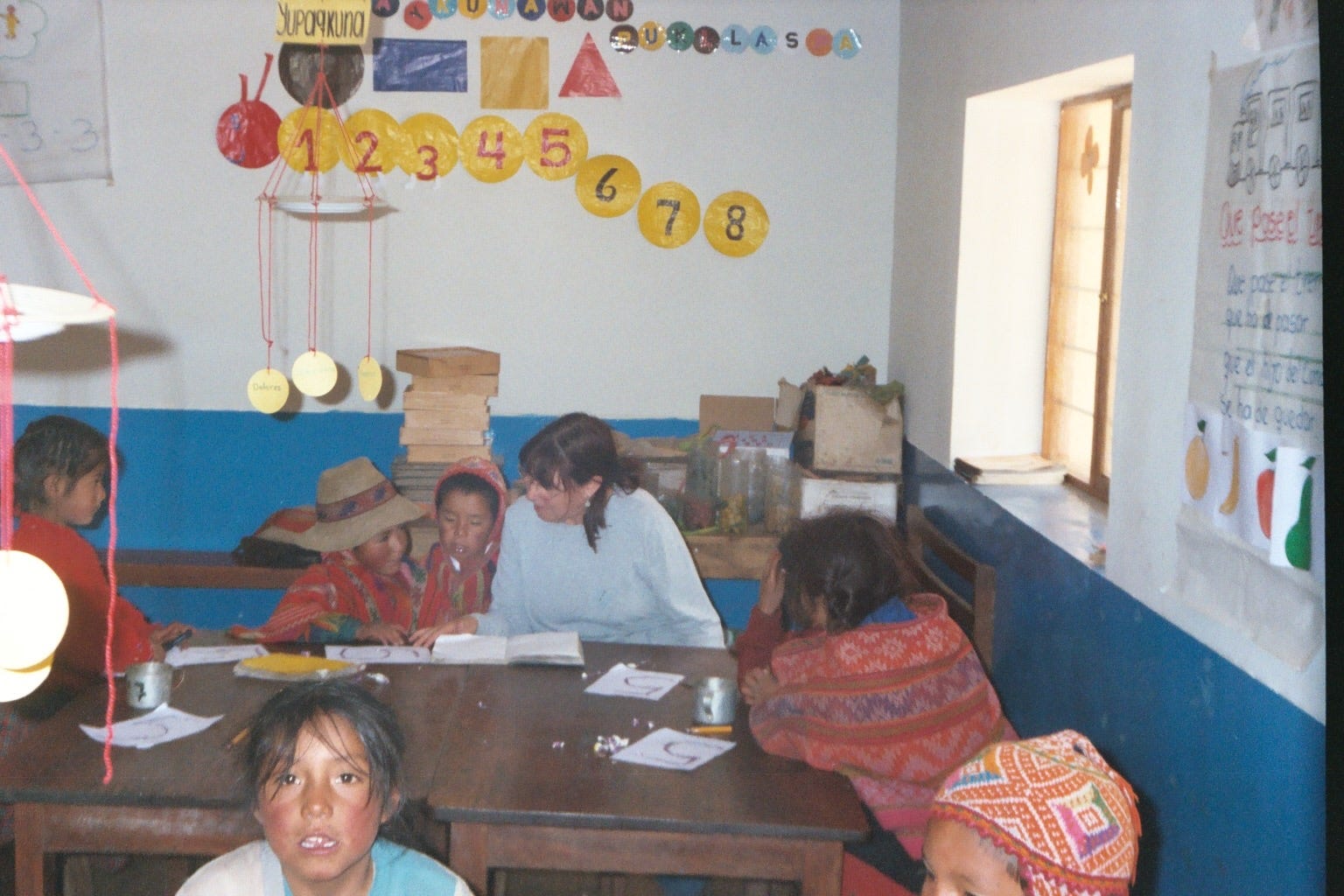
     Once upon a time (over 20 years ago), my wife and I went to Peru to see Machu Picchu and other sites within Peru. It is a beautiful country, full of many wonderful and friendly people. As part of our tour, we did quite a lot of walking and were often walking at greater than a mile altitude. One trip was to an elementary school high in the mountains. My wife, a schoolteacher, had brought our weight limit’s worth of supplies. Notebooks, crayons, and so forth. The school was basically just rooms with desks and decorated walls. I suspect that it was quite cold in the winter. But the teacher and children were glad to see us and our supplies. We did not intrude long upon their class time.

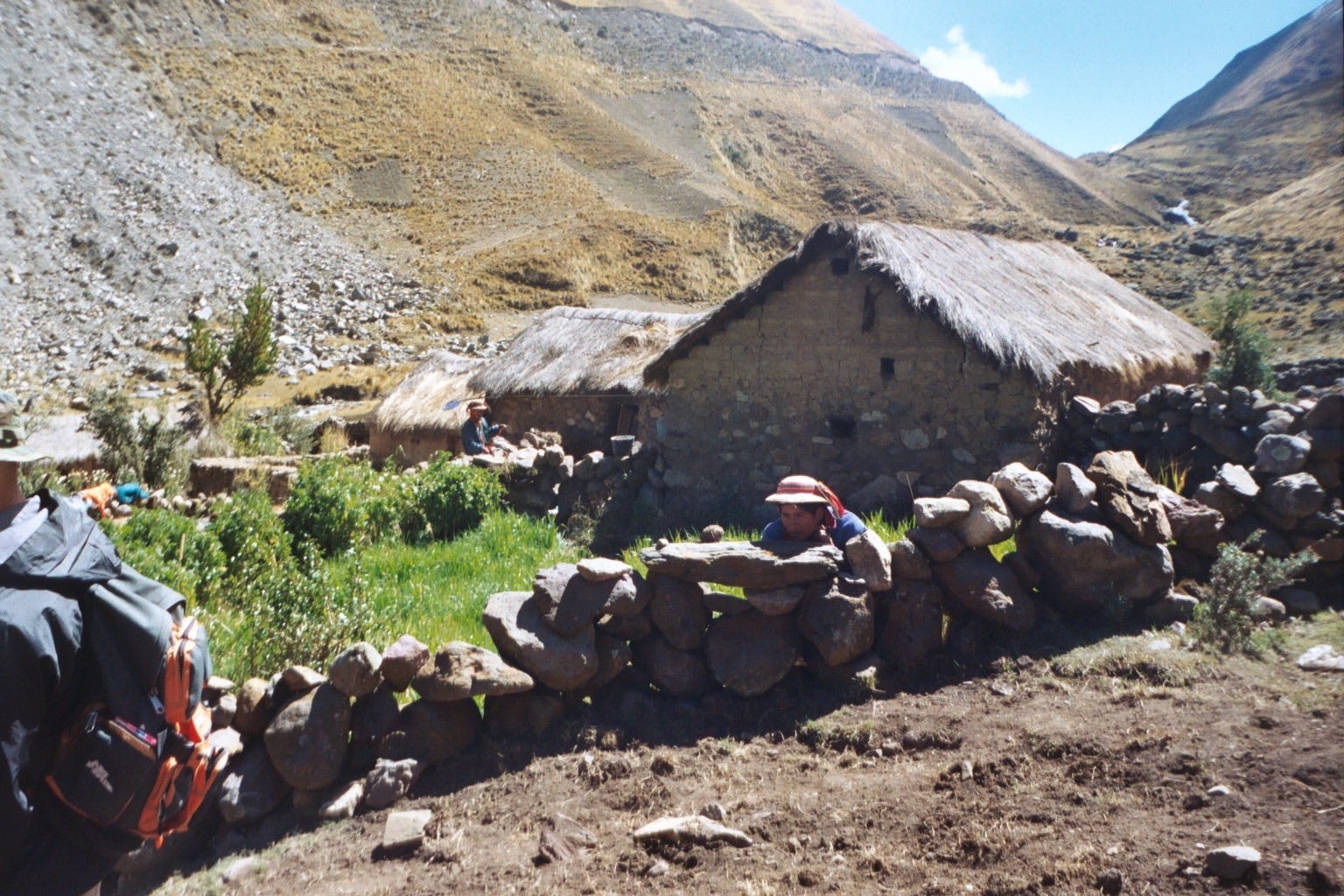
     In order to get to the school, we had to walk along trails leading from mountain peak to mountain peak. Not difficult walks but certainly longer than most US suburban dwellers are used to. We had one 82-year-old woman from Maryland with us. We could barely keep up with her. At any rate, during our treks, we would occasionally walk by a private house, One such had a number of articles in the yard that we were mistaken in thinking that they were trash. A plastic milk jug, some sheets of plastic, some broken dolls. No, these were treasured play things. They were very happy to have them and likely had as much enjoyment from them as my children had from video games in their youth. (I am certain there are children in Peru, in the cities, who are glued to videogames just as my children are.)

     It was a wonderful trip in many ways but what I most brought back was a love and respect for the wonderful people. From what we were used to, they had so little but from a more important basis, they had health, they had each other, and they had happiness in what they had.

     One note in somewhat of an explanatory disclaimer. The people in this small house in the mountains, as well as the children in the school, did have access to community supplied healthcare as did others. This was certainly a factor in the reduction of their stress in “having enough”.

     There exists a list (we seem to love lists, don’t we?) called “The World Happiness Report”. This report ranks the average happiness of citizens of different countries in the world (the Scandinavian countries seem to always do well). It says that the main three of its six criteria are income, social support, and freedom. Well, I certainly won’t try to disagree with them but we should recognize that they are trying to come up with a quantitative number. In order to do such, they have to have criteria that they can evaluate into a ranking number. In my opinion (and other opinions can have equal validity) the basis of happiness can be reduced to security and community. Another way of naming them would be the physical and spiritual sides of happiness.

Security as a basis of happiness

     I use the two words, security and community, to simplify the definition of a basis for happiness. Note that there may be (completely reasonable and valid) reasons why a person might have these in their life and still not be happy.

     What do you think of when you think of security? I think of lack of fear. To be not afraid of not having food to eat. To be not afraid that someone will snatch me, or a member of my family, off the street or break down my door in the middle of the night. To be not afraid that, if I get really sick, I will lose all my savings and become homeless.

     Currently, in the US, any one of these may happen to someone and, for some people, perhaps more than one.

Community as a basis of happiness

     What is community? For me, community requires at least two humans interacting with one another. A certain degree of community can come out of taking care of, and being taken care of by, a pet. That may be sufficient for some people but most need the ability to share with, and be reflected by, at least one other person.

     Of course, communities may be positive, constructive, beneficial groups of people or those communities may be negative, destructive, and malicious. Some groups may be supportive within the group but highly negative with those outside of their group. I don’t think I am qualified to say whether happiness can occur within such a group. Happiness at the expense of the happiness of others? The thought makes me sad.

Does money come into the formula for happiness?

     It all depends on the societal makeup. For most, satisfying the physical security requires some money. The money is a method of arranging for the true needs. In my opinion, the “safety net” of Scandinavian countries allows much physical security without explicit exchanges of money. Naturally, money as a resource is still needed but actual transfer has less importance.

     But a strange thing has happened within much of the “modern” society and that is the concept of “needing” more than is necessary for physical security. Perhaps this occurs, in part, due to the generally stressful situation of a society in constant change. It can lead to a malaise, or even disease, where this desire for more, more, more prevents any capability of obtaining the spiritual/community portion of happiness. Too much creates fear of having less. Too much can start to denigrate the physical and community needs of others. Too much actually DECREASES happiness.

All in all, happiness requires balance

     Physical security and spiritual community work together to give a balanced life and sense of happiness, not matter what words are used to describe it. As usual, this newsletter is not meant to give any “final answers” but a basis for discussion and investigation.

     Ideas & Interpretations is a reader-supported publication. To receive new posts and support my work, consider becoming a free or paid subscriber.

Saturday, April 18, 2026

Wanted: A Plan for the Future: We have shown that we can do it -- so why don't we?

     Artemis II just splashed down upon returning to the Earth. The mission had a few hiccups but, in general, it went well. It had a goal, that goal had various components to make it happen, and we set it in motion. Other segments of the program are expected to happen — and I hope they do. Personally, I had always expected the first lunar colony around 1980 — but priorities shifted a lot after the 1960s.

     How did the priorities shift? Why did we say “well, we did as Kennedy challenged us to do — we had humans walking on the moon before the end of the 1960s — so that’s it?” A lot of it (in my opinion) had to do with the myriad numbers of problems that we had to deal with on the planet Earth. They existed in large numbers. And they still do. Of late, it seems that we are actually heading backward on a number of the areas that we seemed to make progress on in the 1960s and 1970s.

     We diverted our energies and focus from expansion into space to use those resources on problems on Earth? But did that happen?

A Shift from Leadership towards a Goal to a Government of Band-aids

     This is admittedly just my opinion, but why did this shift occur? I think that an emphasis on polls is one area of change. Rather than having a long-term view for the country and policies, the results of polls on particular issues became of more urgency. This is similar to the movement of businesses from long-term development and vision to quarterly reports.

     Ever since political parties developed in the late 1780s, there has been competition for voters such that one party (almost always only two primary parties in the US) will “win” over another. Each party has their “platform” which is a listing of their published priorities about issues. In theory, the voters will review those platforms and decide upon the party closest to their own points-of-view.

     Each individual legislator, or candidate, will have variations in their priorities from the political party platform. But, over my lifetime, the platform has been used less and less. This is true both during the election campaign and after the election has occurred. Once again, this means a shift towards the most hotly contested issues at the moment. Short term conquers long term.

     Perhaps this is an aspect of societal reduction of attention span?

The Journey towards Goals produces many Benefits

     In the 1960s, the US had a goal as a country — land humans on the moon. Note that this goal also had some effect on other countries. As part of that goal, we boosted our education system and encouraged both general learning and STEM focus. The government worked closely with private industry to solve problems needed for the goal. New materials. Transistors. Continued improvement in what would be known as computer technology. Medical instrumentation and monitoring. Communication. Cordless Tools. And so forth. Just do an Internet search on “things developed as a consequence of the space race of the 1960s”. You may be amazed.

     Was this due to the specific goal? Was it that we were challenging space? No. We had a focus. The goal might have been to establish a working laboratory on the ocean floor in the Pacific. It might have been to go a year without a war. It might have been to have accessible, healthy, drinking water for the world. The more general the positive goal, the more general the needs and the more widespread the benefits. The more difficult the goal, the more possibilities for side-effects. Note that negative goals (such as wars) also have spinoffs for developments that CAN be used for peace but, overall, are just not worth the price in human lives.

     Goals can also be very specific. Let’s find a cure for the “common cold”. Let’s eliminate obesity within the country. Jimmy Carter and the Carter Center went after the guinea worm disease and have almost eradicated it over the course of 40 years. Let’s cure cancer! Specific goals have side benefits also though those benefits are less likely to be widespread.

Goals are necessary

     Can you specify a national goal at present? For the USA? For your own country? I can’t for the USA.

     Oh, there are various “band-aid” approaches. The Affordable Care Act helped to decrease bankruptcies and the number of people without access to healthcare in the US — but it was only a bandaid on the road to taking proper care of all the people within the US. There are various regulations that have been put into effect (or, lately, repealed) that address an improvement in CO2 production but not a national goal. Please don’t think that I disparage band-aids. They can be useful in delaying final problems (even death). But they aren’t addressing the goal and they don’t have nearly the number of benefits.

     What will happen when (not if) AI and automation shift the economy such that we have many more people than available jobs? Climate change will create great shifts in populations, crops, living circumstances, and needs. As education improves and we shift away from manual agriculture the birthrate decreases. That means global populations are aging and need more general care. Can we? Are we prepared?

What happens without a goal?

     Read the newspaper. Read, or watch, the various news streams. Check out corporate media. The reality that we need to fact-check items that we are told is, in itself, a very important reflection on the health of society.

     If a person’s house burns down, the neighborhood comes bearing casseroles and blankets. These may be people that you have never met — but they come. A tornado hits a town and you can find people helping others all through the town. After the 1906 San Francisco earthquake, stranger helped stranger and grew to know each other.

     Localized disasters rarely bring about long term changes in behaviors but they do show what people can do when they work together.

The specific positive goal isn’t as important as just having a goal

     People can (and do) argue that space exploration is not important. I disagree — but that isn’t important. The goal is what is important. Goals give purpose. Goals give direction. Goals foster unity rather than divisiveness.

Give me goals. Give me leaders who are leading the country toward positive goals.

Give our children futures.

Ideas & Interpretations is a reader-supported publication. If you feel that these posts are worthwhile to you, please consider getting a subscription via my substack home. Paid subscriptions are very helpful to encourage me to keep putting down letters into the files -- but free subscriptions are still very welcome as my primary goal is to continue to give back to the community that has given so much to me.

Tuesday, April 22, 2025

Normalization is abnormal: When journalism loses its intergrity

     I'm not really sure when it started. It was certainly present in 2016 but it may have been around for quite a while and I just didn't notice. This is about the peculiar idea of "normalization". This happens when people work hard to present a viewpoint -- particularly in comparison to another -- as "equally valid" even though they aren't even close to equally valid.

     The concept of normalization can be achieved in two different ways -- both ways bring multiple people or ideas into the same "normal" umbrella. One way tries to disguise, hide, or ignore aspects such that they appear to be "normal". The other works to expand the definition of "normal" such that the formerly abnormal (not hidden, not disguised) becomes a part of normal. This second form, closer to the dictionary definition, is unusual but not truly abnormal.

     Obviously, attempting to portray something as valid when it isn’t is a type of lie in itself. I guess that the economic world can celebrate the birth of a new vocation — the “fact-checker” — because of this devolution of news coverage. Once upon a time, if a newspaper reported something — including quotes from some celebrity news source — it would either only report what was true or would have expansion sentences “clarifying” the reality that exists around the quotes. Quoth the raven, “Nevermore”. Fact-checkers became required since journalists could no longer be trusted to report the facts. (Everyone recognizes that no one can get everything right all the time — but that is why the world invented retractions and corrections.)

     Just why did this “normalization” start appearing? In my opinion, mostly because of money.

     A quote from John Lydgate but more famously requoted by Abraham Lincoln:

“You can please some of the people all of the time, you can please all of the people some of the time, but you can’t please all of the people all of the time”.”

     The new profit-oriented owners of newspapers, and broadcast stations, wanted to maximize their profits. They could publish the full facts, as far as they could be determined, and possibly irritate some of their readers or advertisers. Or they could go the realtor “beige” route (few people like beige but almost no one objects to it). Strip enough of the facts away that it seemed more palatable to those that might have objected but leave enough facts that both sides were represented. Or, allow a group to use a name that was highly misleading without putting the name in quotes.

     This is “normalization” and it skews reality such that the information presented is no longer useful. In my opinion, this is why “mainstream” corporate media has lost so much credibility — because they aren’t credible anymore (amazing, isn’t it?).

     Another way to look at normalization is by looking at two people as an example. Everyone has good points and everyone has bad points. At a certain level of research, person A has 6 good points and 2 bad points. At that same level of research, person B has 1 good point and 10 bad points. In a “normalized” article, they would each have 1 bad point and 1 good point presented. They seem fairly similar in morality, don’t they? Not the same but rather balanced. But the reality is that one is much worse than the other.

     So, one form of normalization is where we take two (or more) items or people and start ignoring what we don’t want to disclose about them (it can be applied to both). And, since we also want them to be considered of equal believability, lies are allowed to remain unchallenged and, thus, assumed by the reader to be true.

     Another, more constructive, form of normalization works to make the previously unaccepted acceptable. My mother-in-law had her lawn planted in low-water-consumption, low-labor, native plants. Practical, good for the earth, and the only such lawn on the block or even the entire section of the city. Luckily, the property was not part of a HomeOwners Association (HOA) whose primary purpose is to homogenize the neighborhood. Making earth-friendly landscaping acceptable would be a form of normalization. Or the Civil Rights movement. The 1960s did not achieve close to what it hoped in terms of civil rights but it did strive to normalize the existence of multiple skin pigment combinations to be an acceptable part of the community and partially succeeded.

     In both situations, normalizing brings the abnormal “into the fold” — either by manipulating the facts or by widening the acceptability of characteristics. In the above example of person A and person B, normalization COULD have been approached by presenting all of the facts unearthed about each person and then an attempt to make all the points acceptable. This is not usually done because it takes much longer to shift community acceptability criteria than it does to eliminate, and massage, the facts to allow them to be perceived as acceptable.     This is not the only manner in which the standards of journalism has declined within printed, broadcast, or streaming media — but it is a very important one. Being able to compare a whole idea, or a whole person, to another is vital. Of course, as discussed in a prior newsletter, what is reported cannot, or unearthed, be complete — there are too much data to be able to research and present — but, when known, there should not be deliberate distortion such that the presentation becomes a lie.

Ideas & Interpretations is a reader-supported publication. To receive new posts and support my work, consider becoming a free or paid subscriber.


Friday, April 11, 2025

Refugees: the involuntary immigrants

 Refugees are basically involuntary immigrants. If possible and safe, they would have preferred to have stayed in their local country and community.

     A refugee has the same needs as any other person within a country but, when they first arrive, they are most concerned with a place to live and a job that they can handle which will provide for their financial needs. There is also a tendency (sometimes aggravated by the folks managing incoming refugees) to cluster — have the refugees from one location gather together. This can be very difficult for a community if the new folks expand the population of the area by a significant amount.

     If the country, or community, anticipates needs and is able to organize the influx, then all is usually well. If not, then there will be problems within the refugee group which may overflow into the general community. Some people complain about the behavior of the refugees — in particular, criminality. Overall, immigrants (including refugees — who are involuntary immigrants) have a lower crime rate than folks that have been around for a while. (Except for First Nation people, everyone in the US is either an immigrant or descended from immigrants.) However, if the community cannot properly handle the numbers of refugees then crime rates can go up. This isn’t because of being refugees — it is because they have been put into the position of desperate poverty with few visible routes for improvement.

     Overwhelming numbers of refugees is a problem (or challenge). But, although the corporate media and politicians may neglect to say this — being a refugee is not something people want to be. Unlike mainstream immigrants who are moving TO someplace because of advantages they see, refugees are seeking refuge FROM something and most would greatly prefer to continue to live in their location of origin.

     What are the refugees trying to escape from? War is one of the escalating reasons of late. Next may come unlivable physical conditions — drought, floods, change in climate, and so forth. And last is societal/political — where they cannot live safely within their original community.

     If a country is truly upset about the number of refugees who are knocking at their door — or is unwilling, or unable, to handle the numbers — the only reasonable thing to do is to try to reduce the number of refugees. As often is the case — take one step backward. If refugees are a problem then figure out what are the causes of them becoming refugees.

      War is a blatant source of refugees. The rationales behind wars, and why they exist, can be quite complex but the emotional components are often primarily fear and greed. Greed is “I want what you have” and fear is the other side which is “I am afraid you will take what I have”. That item can be material such as occupied land, food, minerals, oil, diamonds, etc. It can also be psychological, or sociological — dealing with concepts like freedom. It can include the lives of the people involved — a desire to kill the other.

     The conflict, by itself, doesn’t often cause refugees. War escalates when weapons are purchased, or provided, for both sides (when only one side possesses them, then the conflict will be short). $2.43 Trillion ($2,430,000,000,000) US Dollars were spent globally on weapons in 2024 — up from 506 billion ($506,000,000,000) US Dollars in 1980. This is ridiculous and horrendous. 318.7 billion ($318,700,000,000) was the United States of America contribution to the weapons market. It is not uncommon for both sides of a conflict to get weapons from the same sources (do you think they give a misery discount?) This is a LOT of money — close to $300/person for every person on the planet (and, in some countries, more than an average person makes in a year).

     I have a radical suggestion. Add a recycling tax on all weapons sales. This tax would pay for the resettlement, re-education, and physical needs for all refugees created by the conflict. It doesn’t come close to compensating for all of the deaths, physical destruction, and mental pain — but it would make the costs of war much more transparent and make the resettlements much less of a problem for the adopting country.

     The second is physical events. The refugees physically can no longer live in their old location. Perhaps rising water is wiping out their city or beach edge. Perhaps they now have changes in climate causing more droughts or floods that is causing food insecurity. Perhaps increases in earthquakes. The land no longer supports as many people.

     The third is political/sociological things. In a way, this is just a superset of war as war is the most violent case of political/sociological things gone wrong. Perhaps because of their religion, skin color, “tribe” (ethnicity), they are not allowed to fully participate in society and to have a full life. Perhaps income inequality has reached the point where there are many people in severe poverty and are doing all kinds of destructive things to survive — gangs, pogroms, assassinations, and so forth. Just existing within their current country/community is dangerous for them.

     Population relocation is a problem — and, with climate change, it is a problem that will occur more frequently in the future. We either address the reasons for the need of relocation or we must address the requirements of taking care of relocated people. Blaming those that are forced to relocate is neither reasonable nor constructive.

     You may not be able to imagine it, but it could happen to you.

Ideas & Interpretations is a reader-supported publication. To receive new posts and support my work, consider becoming a free or paid subscriber.

Thursday, May 2, 2024

Porch Talk: Part of the Community


     Do people remember old-style social media? People gathered around particular spots. These included the water cooler at work as well as the beauty shop, barber shop, local hardware store, and most powerful of all -- the front porch. (This was the front stoop for apartment buildings.)

     Why was the front porch so important? Sitting on your front porch was the same as putting up a shingle saying "open for conversation". Anyone of the neighborhood might walk by and come up and talk. It might be about  a sports game or the recipe for a favorite pie. The topics were not important. The contact was. Small children might come up and sit around listening to the "old folk" talk. Most wasn't worth listening to -- some might be vital for a person starting to grow up.

     So, what happened? A primary reason was the strong encouragement, by for-profit advertisement-supported media, of paranoia and distrust of neighbors and the community -- local, national, and global. Yes, bad things happened in past years and happen now. But the extreme focus, that keeps the media selling advertising, totally eliminates perspective. One instance of evil in a population of 333 MILLION can change the behaviors of a nation.

     I remember when one group of razor blades was found in the fresh apples given out for Halloween in one community. Luckily, no one was hurt but it changed Halloween forever. My grandmother no longer could get children to accept her homemade donuts. My aunt's popcorn balls were left in the bowl. Only the candy manufacturers benefited -- as everyone insisted on getting unhealthy, factory sealed, candy and merchandise. For quite a few years, police departments would x-ray the contents of trick-or-treat bags. Was anything bad every found? Not that I ever heard of -- though that doesn't mean it never did.

     And, as the behavior of the community changes, the market changes to accommodate. People stopped getting to know the neighbors. Walking in a neighborhood is likely to arouse the suspicions of the police and neighborhood watches. Walking when one does not fit into the cultural, ethnic, or racial composition of the neighborhood can be downright dangerous.

     If walking in the neighborhood is suspicious and few people do it then what reason is there for cities to require sidewalks? If no one stops by at other people's houses then why go out onto your front porch in the first place? Why even build front porches -- or front stoops for apartment buildings -- added cost for no benefit?

     Some people say "ah it was better in the old days". Well, memory is malleable,  There were things that were worse, some things -- like the front porch -- were better. Some things were better for certain groups of people and worse for other groups of people. Opposing the purpose of the front porch, laws prevented some groups of people from interacting with other groups of people. Food was of better quality but more people died of infections and diseases. It is not a good idea to over-generalize.

     Is there any way to recover the good of prior times but not go back to the bad aspects (and, hopefully, continue to make those areas better)? I believe so. I hope so. I pray so.

     But I don't have any answers. And don't believe ANY politician who says they have easy answers or have some group to blame for all problems. Somehow, we need to resurrect perspective. Somehow, we need to learn about our neighbors again -- including the important lesson that we are ALL neighbors as we expand the size of the community. Children need to be taught to stay safe and the caution of "stranger danger" without choosing a path where everyone they encounter forever STAYS a stranger.

     Answers? I don't have them. But awareness of the problems, I believe, is a start.

Tuesday, July 11, 2023

Resentment and Anger: When the "Golden Rule" is NOT applied


     Most people have a general knowledge of what the "Golden Rule" indicates. It is not confined to the Christian religion.  It is also featured in Buddhism, Hinduism, Islam, Judaism, Taoism, Zoroastrianism, and most major religions. It is also known by, and sometimes followed better by, those who do not follow a religion. It has many phrasings but, basically, it is to "treat others as you would like to be treated".

     (Note that people tend to apply "Golden Rule" to a LOT of very diverse things which have little, if anything, to do with THE Golden Rule.)

     Much of the time, the Golden Rule is treated only as an ideal goal of behavior. It is something to strive for, something as a guide to be a better person. But, what about the results of NOT applying the Golden Rule? This is something which weakens our businesses and society on a daily basis.

     You have just gotten a new job. You are a bit nervous as you haven't done this work before. You want to make sure you do the job well and have the company proud of you and be happy they chose to hire you. At the end of the first week, you have completed your first assignment -- turning it over to the test department a week before your manager told you it was expected. But, on the second week, you find yourself called into the office. They ask you why you checked a website selling products during your lunch hour. They ask you if you normally only type 20 words per minute and why you were only active on your keyboard for 25% of your time. They are obviously spying on what you were doing and how efficiently they think you were working. (You obviously were working very well to be able to turn over your assignment in half the expected time). Do you still feel like doing your best for the company? Do you feel trusted? Do you have your resume up-to-speed? 

     Imagine that you are yourself. You have saved and have money in your pocket. You want to buy a nice gift for your mother and you are willing to spend more. So, you go into a nice store which has more expensive items. When you enter the store, all eyes fall upon you. No, they aren't deciding which among them can be first to serve you. The eyes are all questioning, suspicious. You haven't done anything wrong and your only plans are to get something nice and give money to the store yet you are treated this way. They are not only NOT treating you the way they would like to be treated but they are going out of their way to treat you just how they would NOT want to be treated. What would your normal, reasonable, rational response be? Frustration? Resentment? Anger?

     You are walking down the street because you would like to get some exercise. You have reached a part of town that you don't normally walk in but the sidewalks are clean and you see a nice park in the distance. There are a few others walking along the street also because it is a nice day. A police car pulls up beside you and asks you what you are doing and why you are there. After a few minutes, they pull away but not before telling you that they expect you to be gone when they return. The police car doesn't stop beside any of the other people walking along the street. Are you still enjoying the day? Are you still looking at the other people, treated much better, as fellow strollers? Do you want to return to that neighborhood? Are you angry? Underneath that anger, are you also afraid? Do you feel served and protected?

     There is an old cliché (yes, there are a LOT of such clichés) -- "you create what you fear". If you treat your employees as untrustworthy they will eventually be untrustworthy. If you treat your customers as potential thieves then they will be sorely tempted to become thieves -- after all, they are already being treated that way, why not? (Most will still continue to be honest even when badly treated.) If you treat your fellow people as if they are not fellow people then you will divide and ostracize. 

     So, following the Golden Rule may be hard. It may be an unachievable goal for all times and situations. But deliberately negating the Golden Rule (let's call it the "Corroded Rule") is sure to cause problems and degrade society.

     And does.


Smoke Gets in Your Lungs (updated)

     This is an article that I published in here on February 22, 2013. I try to make my articles “timeless” as I try to work with “foundatio...