Showing posts with label misleading. Show all posts

Wednesday, March 25, 2026

Leading, and loaded, questions: And other ways to bias questions and polls.

      “When did you stop beating your spouse?” Ludicrous, but such questions happen. By phrasing the question such that some type of foundational axiom is assumed, you bias the situation and make it very difficult for the person to answer. In a poll, the answer, “I have never beat my spouse” is highly unlikely to be part of the limited choice of answers. In a direct interview, it is easy to edit the situation to make the reader or viewer assume that there is some basis for the question. A firm denial may make the responder sound defensive. Perhaps the best response, in a verbal exchange, would be to invoke humor — respond with “that’s the question I was planning to ask you!”.

     Such questions can be called leading questions, loaded questions, presupposition, or begging the question. In the court of US law, this situation of embedding an accusation within a question, is called “leading the witness”. The same thing can occur with inexperienced counselors and can be part of the process for implanting false memories.

Some additional leading questions examples (derived from Google searching):

  • “You enjoyed the movie, didn’t you?”

  • “How much do you love our new product?”

  • “Wouldn’t you agree that our service is the best in the industry?”

    Any question that requires a “yes/no” response — that is not referring to factual data — is almost always leading. “Does 2 come after 1” is a factual question with a binary response. “Do you approve of Politician A’s desire to improve schools” is a question with two embedded biases — it states there is a politician’s desire that may, or may not, exist and it gives a vague directive that few would disagree with (“desire to improve schools”).

It is too easy to manipulate from either direction — the question or the responses.

     Have you ever encountered a poll (or a test, for that matter) where you said “Where is option E”? For polls, that is often deliberate. For tests — well, they probably don’t do it deliberately but it is probably done because of too little, or too much, experience.

What is the color of the sky?
a) Red
b) Yellow
c) Blue
d) Green

     The creator of the test PROBABLY meant the answer to be C (blue) but have you ever seen a sunset, or sunrise, that contained red, yellow, or orange? Very likely. It would have been better to rephrase the question to “What color is the sky, when not obscured by clouds, most of the time?” By the way, it is not unusual for the sky to appear green near tornadoes.

     I have seen something very similar to the following in a poll. I found it amazing that anyone would not see it as just a way to implant false information — but, apparently, many don’t see it that way. Note that it misleads on BOTH the question and the response.

How do you feel about the Democrats’ open door policy for immigration?

a) I think it is wonderful
b) I think it is terrible
c) I think all Democrats should feel ashamed
d) The policy should be squelched immediately

     Of course, Democrats have never had an “open door policy for immigration”. But the question indicates that they have had such a policy and, unfortunately, many people do not do any research on their own — so they believe it. Embedding lies within a question is a time-honored (though not honorable in any other way) method for politicians to mislead. There should be an “e” response:

e) I think the creator of this question should be seated at a blackboard and be required to write “I will not lie” 500 times.
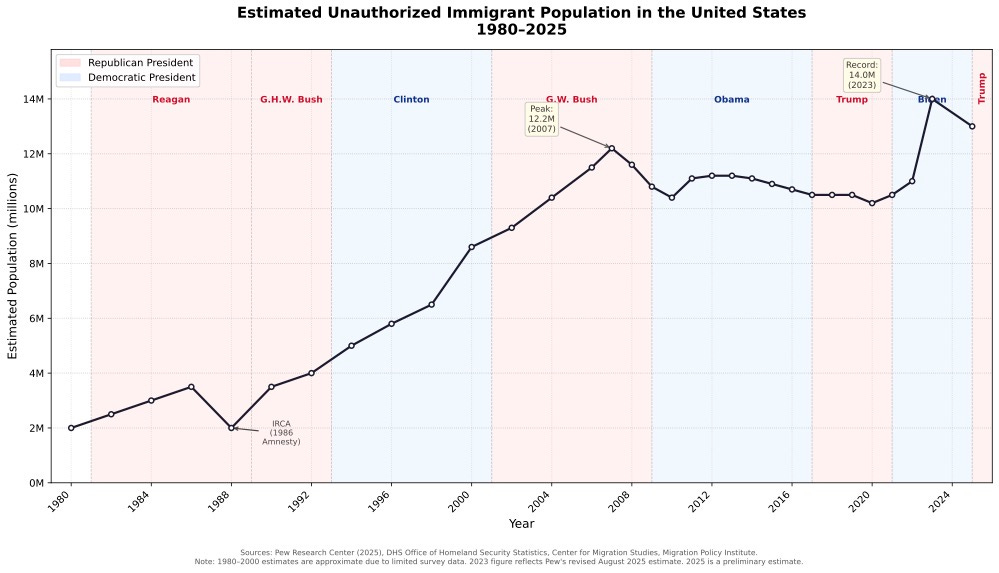
     I am sure that there are questions with embedded lies for other political party situations — but I have seen the above sent in an email. As mentioned in a recent newsletter, it is always dangerous to just believe what you read or have been told. Research, get multiple viewpoints and data sources. What you hear is NOT necessarily what exists. Polls can indirectly lead people to accept lies as truth, and a bad poll question can lead many a recipient astray.

Watch out.

Thanks for reading Ideas & Interpretations! This post is public so feel free to share it.

Ideas & Interpretations is a reader-supported publication. To receive new posts and support my work, consider becoming a free or paid subscriber.

Wednesday, May 15, 2024

Boxes: When a label is used to connect


          Back in 2013, two of my sons moved from the box labeled "Asperger's" to a box labeled "Autism Spectrum Disorder" because of a change in the Diagnostic Manual (DSM). Did this change their behavior, diagnosis or challenges? Absolutely not. BUT, because of the way laws, rules, and regulations are written it meant they now qualified for certain programs for which they were not previously qualified and NOT qualified for others in which they may have participated for years. The benefit, or disadvantage, of being "diagnosed" and "labeled" has been discussed for years among the parents and those working with such challenges. But there is always a direct connection between the label and the benefit or penalty so the labeling matters. When the label changed, it broke the link between the behavior and the treatments.

     We have many, many laws and regulations that are written specifically for a person and their "spouse". If a person is not legally considered to be a spouse -- they have no access to any of the benefits, obligations, and responsibilities of being a spouse. This has caused a whole lot of problems. Once again, it is because of the direct link between label and associated rules, benefits, and obligations.

     There are many situations where a specific label works to include/exclude groups of people. Once upon a time, the word "man" was "understood" to  mean a human of male, female, or other gender. Then, the word "man" was considered to mean something different -- perhaps only male, perhaps only pale-skinned people, perhaps something else. The definition, and use, of the word affected the way the linkage worked between the word and the treatment within society.

     Labels, or boxes, are not used only within legal linkages. They can also be used for presentation and discussions. Labels can be used to mislead. A piece of legislation that is called "The Flobert Bill" will be assumed, by those that hear the label, to be associated with Flobert and, even more likely, direct aspects of dealing with Flobert. The reality, however, is that the legislation is just as likely to be AGAINST Flobert as it is to being FOR Flobert -- and it may have nothing at all to do with Flobert. The naming of such legislation is one more "slight of hand" or act of misdirection -- and it often works.

     Then again, there is the self naming of groups or activities that, once again, can either inform or mislead. For every "pro-" group there SHOULD be an "anti-" group. Alas, the media are often more interested in gathering attention (with attendant advertising revenue) than in accuracy. Thus, we have "pro-x" groups compared to opposing "pro-y" groups where x and y may, or may not, have anything to do with the groups. We can only be certain that one, or both, groups are misleading as they have not allowed themselves to be framed within the "pro-" and "anti-" categories. You cannot reasonably have two "pro-" groups facing against each other and you cannot reasonably have two "anti-" groups facing against one another.

     Finally, there is use of words that well exist within a dictionary. But, how many people actually have a dictionary in hand -- or bother to use such to make sure a term is properly used? Thus, we have many words used in intense, and popular, discussions where the same word is used -- with completely different understandings of meaning -- by different parties with different directives and reasons. This can only properly be called "anticommunication". Communication occurs only with common understanding of what is being communicated.

     The person, cause, event, idea, or whatever is what is important. But humans have a desire to summarize, to categorize, and to condense into a label. Alas, the label will be connected to something but it may serve only to confuse communication rather than to clarify it.

Smoke Gets in Your Lungs (updated)

     This is an article that I published in here on February 22, 2013. I try to make my articles “timeless” as I try to work with “foundatio...